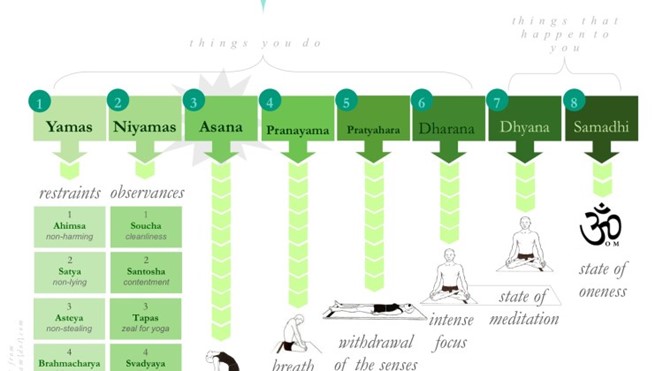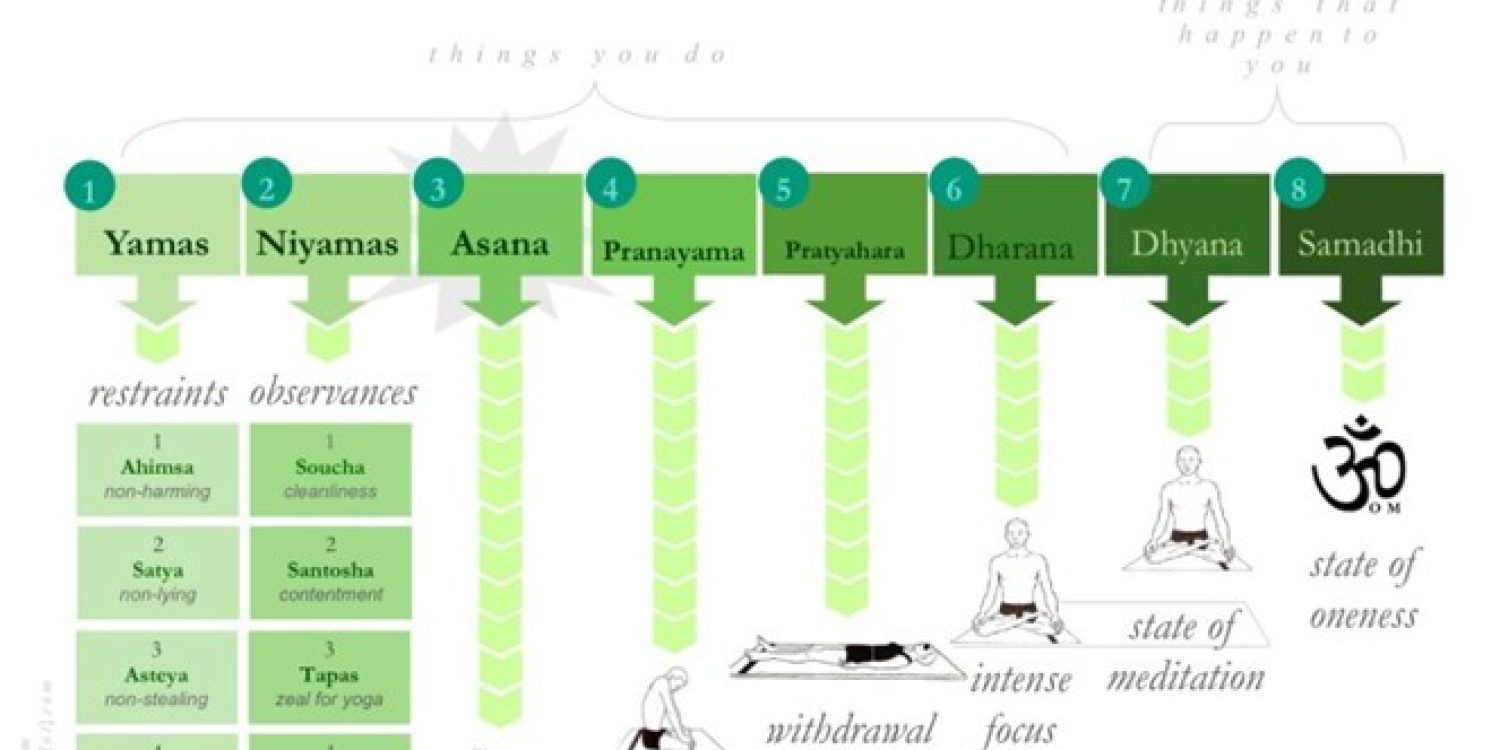
Around 2,000 years ago, a sage named Patanjali compiled the Yoga Sutras, a collection of 196 aphorisms that serve as a philosophical guidebook. He outlined the “Ashtanga” (eight-limbed) path. Think of these not as a linear ladder where you finish one and move to the next, but as branches of a tree growing simultaneously to help you live a more purposeful, peaceful life.
Let’s break them down into bite-sized pieces.
- Yama (Ethical Standards)
The Yamas are our “outer” ethics—how we interact with the world. There are five:
- Ahimsa: Non-violence (being kind to yourself and others).
- Satya: Truthfulness.
- Asteya: Non-stealing.
- Brahmacharya: Right use of energy.
- Aparigraha: Non-greed or non-attachment.
- Niyama (Self-Discipline)
If Yamas are how we treat others, the Niyamas are how we treat ourselves. They include cleanliness (Saucha), contentment (Santosha), self-discipline (Tapas), self-study (Svadhyaya), and surrender to a higher power (Ishvara Pranidhana).
- Asana (Posture)
Finally, the one we know! In the original philosophy, Asana wasn’t about handstands; it was about preparing the body to sit still for long periods of meditation. The goal is to find a balance between effort and ease.
- Pranayama (Breath Control)
Breath is the bridge between the body and the mind. By practicing Pranayama, we learn to move our vital life force (Prana) intentionally, which helps calm the nervous system.
- Pratyahara (Sensory Withdrawal)
Pratyahara is the practice of turning our attention inward and quieting the constant “noise” of our five senses.
- Dharana (Concentration)
Once we’ve quieted the senses, we focus on a single point. This could be a mantra, an image, or simply the breath. It’s the practice of training the “monkey mind” to stay in one place.
- Dhyana (Meditation)
While Dharana is the act of concentrating, Dhyana is the state of being. It is uninterrupted meditation where the observer and the object of meditation begin to merge. It’s that “flow state” we all crave.
- Samadhi (Bliss/Enlightenment)
The final limb is Samadhi. This isn’t something you “do”; it’s a state of total absorption and connection with the universe. It is the ultimate peace that comes from realizing everything is interconnected.
When we understand the Eight Limbs, our time on the mat becomes more than a workout—it becomes a “work-in.”
Next time you’re in a difficult pose, try practicing Ahimsa (kindness to your limits) or Pranayama (steady breath). You’ll find that yoga isn’t just something you do for an hour a day; it’s a way of moving through the world with a little more grace and a lot more heart.